


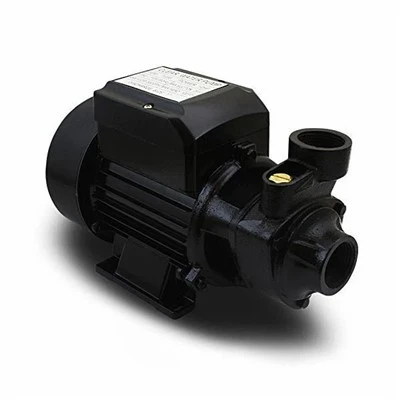
Vertical Centrifugal Pump
Heavy-Duty Vertical Centrifugal Pumps | Engineering & Sourcing Guide
Product Overview & Technical Identification
A vertical centrifugal pump is engineered for installations where spatial footprint is restricted or fluid must be drawn from below floor level (sumps, tanks, or pits). Unlike horizontal configurations, the driver is elevated above the liquid level, isolating electrical components from potential spillages or submersion.
Core Specifications & Selection Parameters
To specify a vertical centrifugal pump for industrial duty, evaluate the following operational parameters against your system curve:
Flow Rate (Q): Up to 500 m3/h (2,200 US GPM) | Match to maximum process demand plus safety margin.
Head (TDH): Up to 120 meters (390 ft) | Determined by system friction losses and static elevation.
Immersion Depth: 0.5 meters to 6.0 meters | Must correspond to sump depth; long columns require intermediate bearing supports.
Materials of Construction: 304SS, 316SS, Duplex 2205, Hastelloy, Titanium, PP, PVDF | Select based on chemical compatibility, pH, temperature, and chloride concentration.
Drive Configuration: Close-coupled or Frame-mounted (V-belt / Direct drive) | Frame-mounted isolates thrust loads from the motor bearings.
Shaft Sealing: Single/Double mechanical seal, lip seals, vapor barrier | Choose gas-purged or dry-running seals for volatile or hazardous media.
Typical Industrial Applications
Chemical Processing Plants: Transferring concentrated acids, caustic solutions, and solvents from below-ground storage tanks.
Wastewater Treatment Facilities: Pumping abrasive slurries, effluent streams, and chemical dosing liquids in municipal and industrial plants.
Metal Finishing & Pickling Lines: Handling heated hydrochloric or sulfuric acid baths in continuous pickling operations.
Marine & Offshore: Bilge drainage, seawater lift pumps, and ballast water management systems.
Manufacturing Process & Quality Control
Reliability in vertical pumping relies on strict dimensional control during machining and dynamic balancing during assembly.
CNC Machining: Casing bores, impellers, and column pipes are machined on 4-axis CNC horizontal/vertical centers to maintain strict concentricity and eliminate runout.
Dynamic Balancing: All impellers are dynamically balanced to ISO 1940 Grade 6.3 (or Grade 2.5 for high-RPM models) to minimize vibration and extend bearing life.
Non-Destructive Testing (NDT): Castings undergo dye penetrant inspection (PT) or ultrasonic testing (UT) on pressure-retaining and wetted walls upon request.
Hydrostatic Testing: Every assembled pump casing undergoes a hydrostatic pressure test at 1.5 times the maximum working pressure prior to coating and shipment.
Supplier Evaluation Checklist for Buyers
When qualifying a vertical centrifugal pump manufacturer, verify the following engineering and operational capabilities:
Hydraulic Testing Facility: Does the factory operate an in-house test bench compliant with ISO 9906 (Grade 1B or 2B) standards to provide certified performance curves?
Shaft Deflection Calculation: Can the engineering team provide finite element analysis (FEA) or critical speed calculations for column lengths exceeding 2 meters?
Traceability: Are material test reports (EN 10204 3.1) supplied for all wetted metallic components?
Custom Engineering Support: Can the manufacturer modify mounting flanges, discharge positions, or baseplate dimensions to match existing foundation bolts during retrofit projects?
Frequently Asked Questions
Q: How do you prevent shaft whip and excessive vibration in deep-setting vertical pumps?
A: For pumps with immersion depths exceeding 1.5 meters, intermediate sleeve bearings (bushing supports) are installed along the column pipe at calculated intervals. These bearings are lubricated by the pumped liquid or an external flush line. Furthermore, shafts are precision-ground to tighter tolerances, and critical speed analyses are performed during the design phase to operate well below the first resonant frequency.
Q: Can vertical centrifugal pumps run dry?
A: Standard centrifugal pumps cannot run dry because the mechanical seal and internal bushings rely on the pumped liquid for lubrication and cooling. Running dry generates friction heat, leading to immediate seal face cracking or bushing seizure. For applications prone to intermittent liquid supply, specify dry-run-protected seal arrangements or install an external liquid flush system with a dry-sensor interlock.
Q: What is the difference between a cantilever vertical pump and a submerged bearing pump?
A: A cantilever vertical pump features no submerged bearings; the shaft is entirely supported by heavy-duty span bearings located above the mounting plate outside the liquid. This design tolerates dry running and abrasive slurries without bearing contamination. Submerged bearing pumps utilize line bearings inside the liquid column, allowing for much greater immersion depths but requiring careful fluid compatibility matching for the bearing material (e.g., carbon, PTFE, ceramic).
Q: What international standards do your pump test benches follow?
A: Performance testing is conducted in accordance with ISO 9906 (Rotodynamic pumps - Hydraulic performance acceptance tests - Grades 1B, 1E, and 2B) and HI 1.6 (Centrifugal Pump Tests). Full test reports including head, flow, power, and efficiency curves are available upon request prior to dispatch.
Q: How are corrosive vapors prevented from attacking the motor and upper bearings?
A: A vapor barrier bushing, labyrinth seal, or gas-purged deflector plate is integrated into the mounting plate assembly. This physical barrier blocks corrosive vapors traveling up the discharge column or shaft casing from reaching the upper motor support bracket and atmosphere.
Q: What documentation is provided with each shipment?
A: Each pump shipment includes an individual Manufacturer's Data Report (MDR) containing:
Certified Hydrostatic and Performance Test Curves (ISO 9906)
Material Test Certificates (EN 10204 3.1 for wetted parts)
Dynamic Balancing Reports
Installation, Operation, and Maintenance (IOM) Manual with exploded parts lists and recommended spare parts inventories (RESI).
Engineering Inquiry & Data Sheet Request
Ready to specify your system? Submit your required flow rate, head, immersion depth, and fluid chemistry to receive a verified hydraulic selection data sheet and engineering performance curve within 24 hours.
• Download Pump Engineering Data Sheet (.PDF)
• Request Certified ISO 9906 Test Curve Quote
Hot Tags: vertical centrifugal pump, China vertical centrifugal pump manufacturers, suppliers, factory
Previous
Vertical Inline PumpNext
No InformationYou Might Also Like




Send Inquiry