


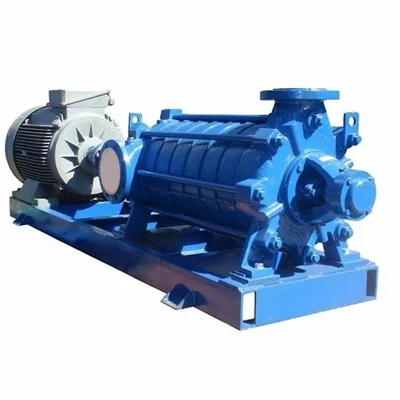
High-Pressure Reciprocating Pump
Heavy-Duty High-Pressure Reciprocating Plunger Pumps
Engineered for continuous-duty industrial fluid transfer, hydrostatic testing, and high-pressure cleaning systems. Built with forged alloy fluid ends and solid ceramic plungers to withstand aggressive media and operating pressures up to 1,500 bar.
Technical Specifications & Performance Matrix
Select standard configurations below. Custom displacement, gear ratios, and metallurgical upgrades are available for OEM system integration.
|
Model Series |
Max Pressure (bar / PSI) |
Flow Rate Range (L/min / GPM) |
Plunger Diameter (mm) |
Power Input (kW / HP) |
Fluid End Material Options |
|
HPR-100 |
350 / 5,000 |
20 - 85 / 5.3 - 22.5 |
22 - 38 |
30 / 40 |
Forged Carbon Steel, 316 Stainless Steel |
|
HPR-250 |
700 / 10,000 |
45 - 180 / 11.9 - 47.5 |
30 - 50 |
75 / 100 |
Duplex Stainless Steel (2205), NAB |
|
HPR-500 |
1,000 / 15,000 |
80 - 320 / 21.1 - 84.5 |
40 - 70 |
160 / 215 |
Super Duplex (2507), Forged Alloy Steel |
|
HPR-800 |
1,500 / 22,000 |
120 - 450 / 31.7 - 118.8 |
45 - 80 |
250 / 335 |
Super Duplex, Custom Monel Overlays |
Drive Speed Range: 450 to 950 RPM (Gearbox reduction or direct belt drive compatible).
Lubrication System: Splash lubrication combined with auxiliary forced-feed lubrication for heavy-duty continuous operation.
Engineering & Material Selection
Pump longevity depends directly on metallurgical integrity and surface finish. Material selection matches specific chemical compatibility and abrasive load requirements.
Fluid Ends: CNC-machined from single-piece forged blocks (eliminating casting porosity risks). Standard materials include forged carbon steel, 316L stainless steel, and ASTM A890 Grade 5A Duplex Stainless Steel.
Plungers: High-purity solid sintered ceramic (Al2O3) ground to a surface finish of Ra < 0.2 um. Resists abrasive particle scoring far outperforming traditional chrome-plated steel.
Valves & Seats: Precision-ground stainless steel or stellite-faced poppet valves designed for high-frequency cyclic loading and rapid seating with minimal fluid slip.
Sealing Elements: Spring-loaded multi-stage V-packing rings (HNBR, PTFE, or Kevlar-reinforced elastomer blends) engineered to manage thermal expansion and prevent media bypass.
Manufacturing, Machining & Quality Control
Every pump assembly passes through strict dimensional and metallurgical verification stages prior to factory dispatch.
Machining Precision: Fluid end block internal galleries are machined on 5-axis CNC horizontal boring centers to maintain concentricity tolerances within 0.01 mm.
Non-Destructive Testing (NDT): All forged fluid end blocks undergo Ultrasonic Testing (UT) and Magnetic Particle Testing (MT) in accordance with ASTM standards to detect internal micro-fissures.
Hydrostatic Factory Acceptance Testing (FAT): 100% of manufactured pumps undergo a 2-hour full-load factory test run at 1.25x working pressure using calibrated digital data loggers to verify flow stability, bearing temperature rise, and zero external leakage.
Traceability: Material Test Reports (MTRs conforming to EN 10204 3.1) are supplied for all pressure-containing components.
Typical Industrial Applications
Pipeline Hydrostatic Testing: Pressurizing transmission lines up to 1,000 bar to verify structural integrity before commissioning.
Reverse Osmosis & Desalination: High-pressure feed injection for industrial water purification skids.
Surface Preparation & Hydrodemolition: Delivering steady high-pressure water streams for marine barnacle removal and concrete scarification.
Chemical & Polymer Injection: Metering high-viscosity or corrosive additives into active petrochemical process lines.
RFQ & Technical Inquiry Checklist
To ensure exact pump sizing and prevent cavitation or mechanical overload, include the following parameters in your inquiry:
Fluid Characteristics: Specific gravity, viscosity, temperature, and chemical composition (including pH and chloride concentration).
Operating Parameters: Required flow rate (L/min or GPM) and discharge pressure (bar or PSI).
Duty Cycle: Hours of operation per day (e.g., 8 hours intermittent vs. 24/7 continuous duty).
Drive Configuration: Electric motor voltage/frequency, diesel engine drive, or bare shaft pump head only.
Certificates Required: ATEX zone classification, API 674 compliance, or third-party inspection (SGS/BV).
Frequently Asked Questions
Q: What causes premature plunger packing wear, and how is it mitigated?
A: Premature packing failure typically results from abrasive solids in the fluid, dry running, or misaligned plungers. Mitigation involves installing 100-micron pre-filtration on the suction line, utilizing internal flush cooling ports on the packing glands, and maintaining correct spring-load tension during assembly.
Q: Are these pumps compliant with API 674 standards for positive displacement pumps?
A: Yes. Custom configurations can be engineered and manufactured fully compliant with API 674 3rd edition requirements, including heavy-duty power end designs, pulsation dampeners, and auxiliary lubrication skids upon request.
Q: What is the maximum fluid temperature the standard pump head can handle?
A: Standard elastomer seals handle fluids up to 60 °C (140 °F). For higher temperature applications up to 120 °C (248 °F), high-temperature FKM or FFKM dynamic seals and modified stuffing box clearances must be specified.
Q: Can these reciprocating pumps handle salt water or corrosive chemicals?
A: Yes, provided the correct fluid end metallurgy is selected. For seawater, desalination, or high-chloride environments, we specify ASTM A890 Grade 5A Super Duplex Stainless Steel or Nickel-Aluminum Bronze (NAB) fluid ends paired with solid ceramic plungers.
Q: What pulsation dampening is required on the discharge side?
A: Because reciprocating pumps experience inherent flow pulsation from cyclic plunger strokes, a bladder or diaphragm-type discharge pulsation dampener must be installed downstream to reduce pressure fluctuations to within +/-2%, protecting piping joints and instrumentation.
Q: What is the standard lead time for a custom-engineered high-pressure pump unit?
A: Standard bare shaft pump models are typically dispatched within 4 to 6 weeks. Complete engineered skids integrated with electric motors, gearboxes, relief valves, and pressure control panels require 8 to 12 weeks depending on component sourcing and specific third-party testing requirements.
Hot Tags: high-pressure reciprocating pump, China high-pressure reciprocating pump manufacturers, suppliers, factory
Previous
High-Pressure Booster PumpYou Might Also Like




Send Inquiry