


Variable Frequency Water Supply Pump
Industrial-Grade Variable Frequency Water Supply Pump
Product Overview & Core Specifications
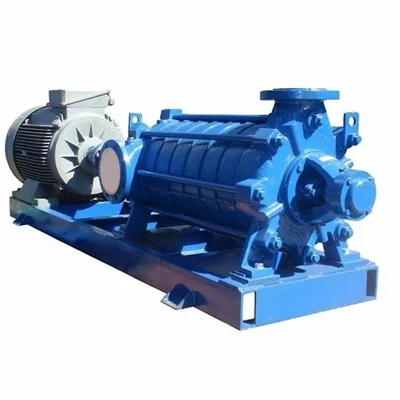
The Variable Frequency Water Supply Pump is an integrated pressure-boosting system combining a multi-stage centrifugal pump, a permanent magnet or induction motor, and an onboard variable frequency drive (VFD). By utilizing closed-loop PID control, the system dynamically adjusts motor speed to maintain constant discharge pressure regardless of fluctuating inlet pressure or downstream flow demand.
Technical Specifications & Performance Data
|
Parameter |
Specification Range |
Standard / Verification |
|
Max Flow Rate (Q) |
Up to 120 m3/h (528 GPM) |
ISO 9906 Grade 3B Testing |
|
Total Head (H) |
Up to 160 m (525 ft) |
Hydrostatic Pressure Test (1.5 x Max Working Pressure) |
|
Motor Efficiency |
IE3 / IE4 Premium Efficiency |
IEC 60034-30-1 |
|
Power Supply |
380V +/- 10% (3-phase) / 220V (Single-phase options available) |
Grid Compatibility Test |
|
Fluid Temperature |
-15C to +104C (5F to 219F) |
Material Thermal Stress Analysis |
|
Enclosure Rating |
IP55 (Standard) / IP56 (Optional) |
IEC 60529 Dust & Water Protection |
|
Wetted Materials |
AISI 304 / AISI 316 Stainless Steel |
PMI Material Composition Test Report |
Product Selection & Sizing Guide
Selecting the correct variable frequency pump prevents premature mechanical wear, motor overload, and hydraulic cavitation. Follow these engineering criteria for precise sizing:
Determine Peak Flow (Q_max): Calculate the simultaneous maximum water consumption of all fixtures or processes based on ASHRAE or local plumbing codes.
Calculate Total Dynamic Head (H_tdh): Account for static elevation lift, pipe friction losses, fitting losses, and required terminal residual pressure (2.5 bar to 3.5 bar typically required at the highest/furthest outlet).
Verify Net Positive Suction Head (NPSHa > NPSHr): Ensure adequate suction pressure to prevent vapor bubble formation and impeller pitting.
Select Material Grade: Use AISI 304 for standard potable water systems; specify AISI 316 for chlorinated water, coastal environments, or light industrial chemical applications.
Application Scenarios & Engineering Fit
Commercial High-Rise Buildings: Maintains stable water pressure across multi-zone residential or office towers, eliminating pressure drops on upper floors during morning and evening peak hours.
Industrial Cooling Loops: Regulates constant cooling water flow for injection molding machines, air compressors, and heat exchangers, stabilizing thermal performance.
Municipal Booster Stations: Upgrades aging fixed-speed municipal water distribution networks to reduce water hammer and suppress pipe burst incidents.
Agricultural Irrigation Systems: Delivers consistent water pressure across pivot or drip irrigation grids despite fluctuating field elevation changes.
Manufacturing, Materials & Quality Verification
Hydraulic Impeller Stamping: Impellers are precision-formed using 500-ton hydraulic presses with AISI 304/316 stainless steel sheets, eliminating casting porosity and ensuring smooth internal surface finishes (Ra <= 0.8 um) to reduce hydraulic friction losses.
Laser Welding: Casing assemblies and flow-path components utilize automated fiber laser welding, maintaining penetration depth consistency and structural integrity under cyclic pressure testing.
Dynamic Balancing: Rotating assemblies (shaft, rotor, and impellers) undergo computerized multi-plane dynamic balancing to ISO 1940 Grade G2.5, minimizing mechanical vibration and extending bearing service life (L10 > 100,000 hours).
Factory Acceptance Testing (FAT): Every assembled pump unit is tested on a closed-loop hydraulic test bench measuring flow, head, power consumption, vibration velocity, and acoustic emission prior to crating. Test certificates are archived by serial number.
Certifications: CE (EMC and Low Voltage Directives), ISO 9001 Quality Management System, and WRAS-compliant elastomers for potable water contact.
Supplier Evaluation & Procurement Checklist
When sourcing industrial water supply pumps, engineering buyers should evaluate suppliers against these operational benchmarks:
In-House Testing Capability: Verify if the supplier operates a certified test bench capable of generating real-time ISO 9906 performance curves rather than theoretical calculations.
VFD Integration Expertise: Ensure the supplier programs the internal PID parameters specifically for water booster applications to prevent hunting (pressure oscillation) and motor resonance.
Traceability of Raw Materials: Request mill test certificates (MTC) for stainless steel plates and pump shafts to confirm alloy composition (e.g., actual nickel and chromium content in 316 stainless steel).
Spare Parts Interchangeability: Confirm standard mechanical seal dimensions and bearing part numbers (e.g., NSK or SKF) to ensure local replacement availability without proprietary lock-in.
Frequently Asked Questions
Q: How does the VFD prevent water hammer in long pipeline runs?
A: The integrated VFD controls motor acceleration and deceleration ramps during start-up and shut-down phases. By gradually ramping frequency (Hz) up or down, the system eliminates sudden velocity changes in reference to the fluid column, preventing pressure spikes that cause pipe joint failure.
Q: What is the minimum flow protection mechanism?
A: When downstream demand drops to zero (all taps closed), the built-in pressure transducer detects the threshold and signals the VFD to enter a low-frequency sleep mode. This prevents closed-valve churning, which otherwise overheats the water inside the pump casing within minutes.
Q: Are harmonic filters included to protect facility power grids?
A: Standard units feature integrated DC reactors (chokes) that suppress lower-order harmonics, keeping Total Harmonic Distortion (THDi) below 35%. For sensitive environments requiring THDi < 10%, active front-end filters or external harmonic mitigation modules can be specified.
Q: Can multiple pumps operate in a parallel multi-pump configuration?
A: Yes. The control boards support RS485 (Modbus RTU) communication protocols, allowing up to 8 pumps to run in a master-slave or duty-assist-standby configuration without an external PLC. Lead-lag rotation equalizes operating hours across all units.
Q: What documentation is provided with each shipment?
A: Each pump ships with an individual factory test report (ISO 9906), electrical wiring diagrams, dimensional submittal drawings in DWG/STEP format, an Operation & Maintenance (O&M) manual, and material certificates.
Q: What is the standard lead time for customized specifications?
A: Standard models (380V, 3-phase, AISI 304) ship within 15 to 20 business days. Custom configurations requiring specific flange standards (ANSI, DIN, JIS), special mechanical seal elastomers (Viton/EPDM), or non-standard paint coatings require 25 to 35 business days.
Hot Tags: variable frequency water supply pump, China variable frequency water supply pump manufacturers, suppliers, factory
You Might Also Like




Send Inquiry